Pittsburgh’s Gilded Age
The Black Carnegies
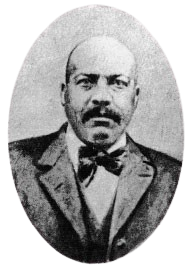
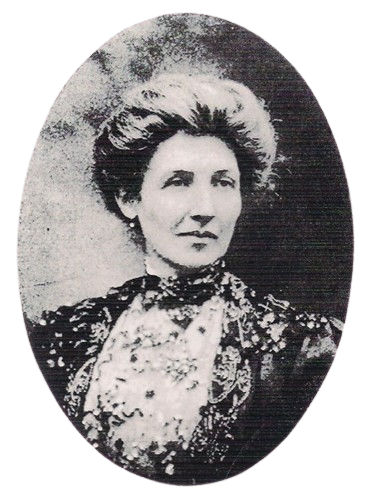
Cumberland "Cap" Posey & Anna Posey
Smoketown: The Untold Story of the Other Great Black Renaissance
The other great Renaissance of black culture, influence, and glamour burst forth joyfully in what may seem an unlikely place—Pittsburgh, PA—from the 1920s through the 1950s.
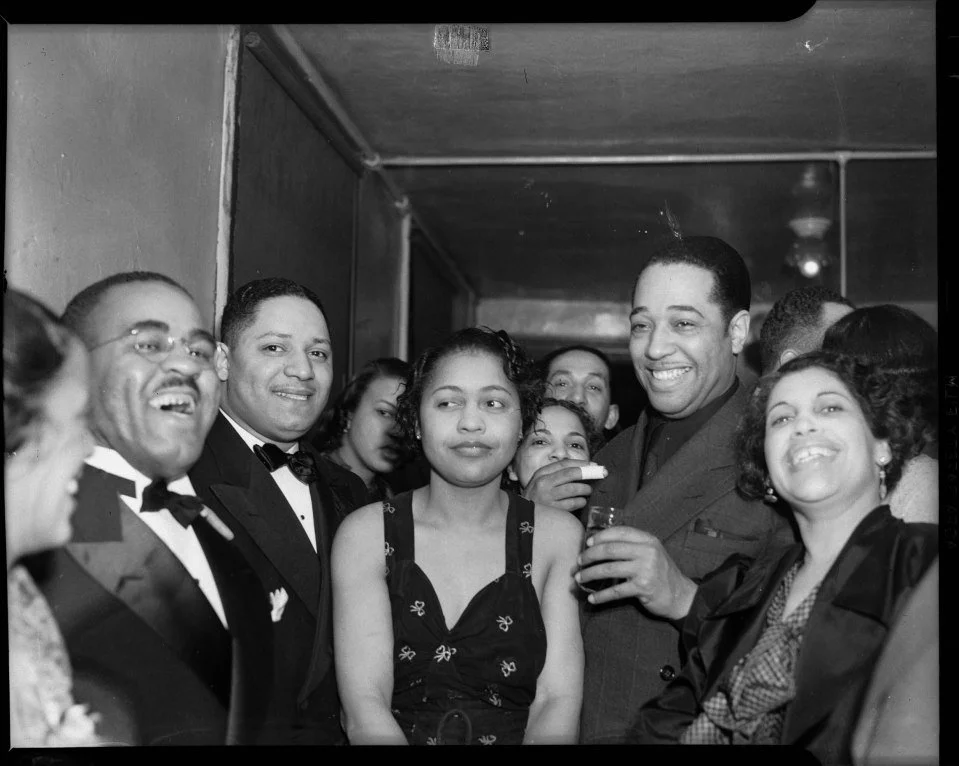
Today black Pittsburgh is known as the setting for August Wilson’s famed plays about noble but doomed working-class strivers. But this community once had an impact on American history that rivaled the far larger black worlds of Harlem and Chicago. It published the most widely read black newspaper in the country, urging black voters to switch from the Republican to the Democratic Party and then rallying black support for World War II. It fielded two of the greatest baseball teams of the Negro Leagues and introduced Jackie Robinson to the Brooklyn Dodgers. Pittsburgh was the childhood home of jazz pioneers Billy Strayhorn, Billy Eckstine, Earl Hines, Mary Lou Williams, and Erroll Garner; Hall of Fame slugger Josh Gibson—and August Wilson himself. Some of the most glittering figures of the era were changed forever by the time they spent in the city, from Joe Louis and Satchel Paige to Duke Ellington and Lena Horne.
Mark Whitaker’s Smoketown is a captivating portrait of this unsung community and a vital addition to the story of black America. It depicts how ambitious Southern migrants were drawn to a steel-making city on a strategic river junction; how they were shaped by its schools and a spirit of commerce with roots in the Gilded Age; and how their world was eventually destroyed by industrial decline and urban renewal. Whitaker takes readers on a rousing, revelatory journey—and offers a timely reminder that Black History is not all bleak.
you can read an excerpt here And the full novel here with your AndrewID.
3 Factors from the gilded age that led to the black renaissance in pittsburgh
According to Mark Whitaker
-
While large cities like New York, Chicago and Philadelphia attracted the greatest share of Black migrants, the promise of work in Pittsburgh’s steel mills also made Southwestern Pennsylvania a desirable destination. From 1910 to the 1930s, Pittsburgh’s Black population more than doubled, growing from about 25,000 to more than 55,000.
Black Pittsburghers who had been living in the city for many years before the Great Migration referred to themselves as Old Pittsburghers, or OPs. These established Black Pittsburghers had a higher class status than the migrants. Some of these OPs thought the incoming Black migrants were sparking racial animosity from the white community and were a strain on already taxed resources.
There was also community support for migrants from churches and Black-led organizations, including the Urban League of Pittsburgh, which worked to address the inadequate health care they faced.
Back then, the jobs available to Black people in steel mills were the lowest-paying and most physically demanding jobs. They experienced high rates of workplace injury and death. Black workers were also the first targets for layoffs, and that meant periodic unemployment was a way of life. It’s hard to build wealth under those circumstances. Black migrants mostly lived in the lower Hill District, where they were charged artificially high rents for poor, overcrowded housing.
https://www.pittwire.pitt.edu/features-articles/2026/02/26/black-migration-pittsburgh-oral-histories
-
1831 - Lewis Woodson founded an all-black school called the Pittsburgh African Education Society. Martin Delany, who would later become the first Black graduate of Harvard Medical School, walked 150 miles on foot at nineteen-years-olds to study at Woodson's school.
1858 - Charles Avery, abolitionist, upon his death created an endowment to support twelve scholarships a year at Pittsburgh's leading college, the Western University of Pennsylvania, for outstanding "males of the colored people in the United States of America or the British Province of Canada."
-
Cumberland "Cap" Posey is referred to as one of the "Black Carnegies". After marrying his wife in Athens Ohio, they moved to Pittsburgh in 1883 (Old Pittsburgher), for entrepreneurial opportunities. He spent years studying the business of Carnegie, Frick, Mellon and Heinz before making his own investment in coal boats in 1892. Posey oversaw a payroll of one thousand employees and had nine white investors. Without specifying the exact connections, numerous accounts describe Posey as a business partner of Henry Frick and a supplier to Andrew Carnegie’s steel mills. This all positioned Posey to recruit 346 Black workers to three Carnegie steel mills in 1902 and the decade following.
In 1909, a writer named Helen A. Tucker visited Pittsburgh to write an article called "The Negroes of Pittsburgh" for the journal Charities and the Commons. She visited Cap Posey in Homestead and hailed his business success as a sign that "there is here [in Pittsburgh] a chance, such as perhaps few northern cities give, for the industrial Negro to succeed." Cap Posey was also one of the founding investors in the Pittsburgh Courier. "In its heyday, from the twenties until the late fifties, Pittsburgh’s black population was less than a quarter of the size of New York City’s and a third of the size of Chicago’s, those two much-larger metropolises that have been associated with the phenomenon of a black renaissance. Yet during those decades, it was Pittsburgh that produced the best-written, widest-selling, and most influential black newspaper in America, the Pittsburgh Courier"
https://www.theparisreview.org/blog/2018/01/22/smoketown-untold-story-great-black-renaissance/
The Hill District
Beginning in the 1910s, the Hill attracted migrants from elsewhere in the United States (mainly from the rural American South in the Great Migration) and abroad. The neighborhood's black population grew rapidly from around 10,000 in 1890 to over 37,000 by 1920. The influx of so many new residents resulted in a housing shortage exacerbated by the rigid system of segregation that limited potential housing for Blacks almost entirely to the Hill District. The experience of young, single Black men underscored the severity of the housing crisis. Under housing segregation and their marital status, these men were crammed into the limited number of units available in the district. The result was cramped boarding houses where workers slept in shifts.
Beginning in the years leading up to World War I, "the Hill" was the cultural center of Black life in the city and a major center of jazz. Black entrepreneurs established and ran an extensive roster of nightspots, including nightclubs, bars, and gambling dens, which required a constant influx of musical acts to keep guests entertained. The thriving musical culture, widespread in the Hill for nearly four decades, led the neighborhood to be considered "the Crossroads of the World" by poet Claude McKay. That phrase would be popularized by radio DJ Mary Dee (Mary Dee Dudley) of WHOD Radio, Pittsburgh's only Black radio station. Also, the Negro League’s Pittsburgh Crawfords baseball team significantly represented the community.
Pittsburgh’s Black Population by the Numbers