
Appalachian Folk Magic
The origins of Appalachian Folk Magic
The first people to combine Appalachian nature and spiritual ritual were the Cherokee and Choctaw. European settlers didn’t flood the early American colonies until the eighteenth century, carrying traditional folk healing practices with them from Western Europe. Their emigration was sparked by the spread of Protestantism across Europe and the persecution of those practicing outside the Church. Throughout the years of the Spanish Inquisition, religious institutions used the term “witch” to identify someone practicing healing and ritual outside the bounds of the Christian Church.
When these Scottish, Irish, and English settlers arrived, they combined their traditional practices with Native American knowledge about flowers, berries, roots, and leaves native to Appalachia. Settlers from Germany and people of African descent also shared their wisdom about rituals and natural remedies. Out of this large melting pot was born a uniquely American faith tradition practiced mostly by familial matriarchs.
Between 1860 and 1980, Appalachian women held and used knowledge about herbal and home remedies that could be used at a time when many local governments restricted medical treatment to doctors. It was their unpaid labor that kept communities alive.
Our Love-in-idleness:
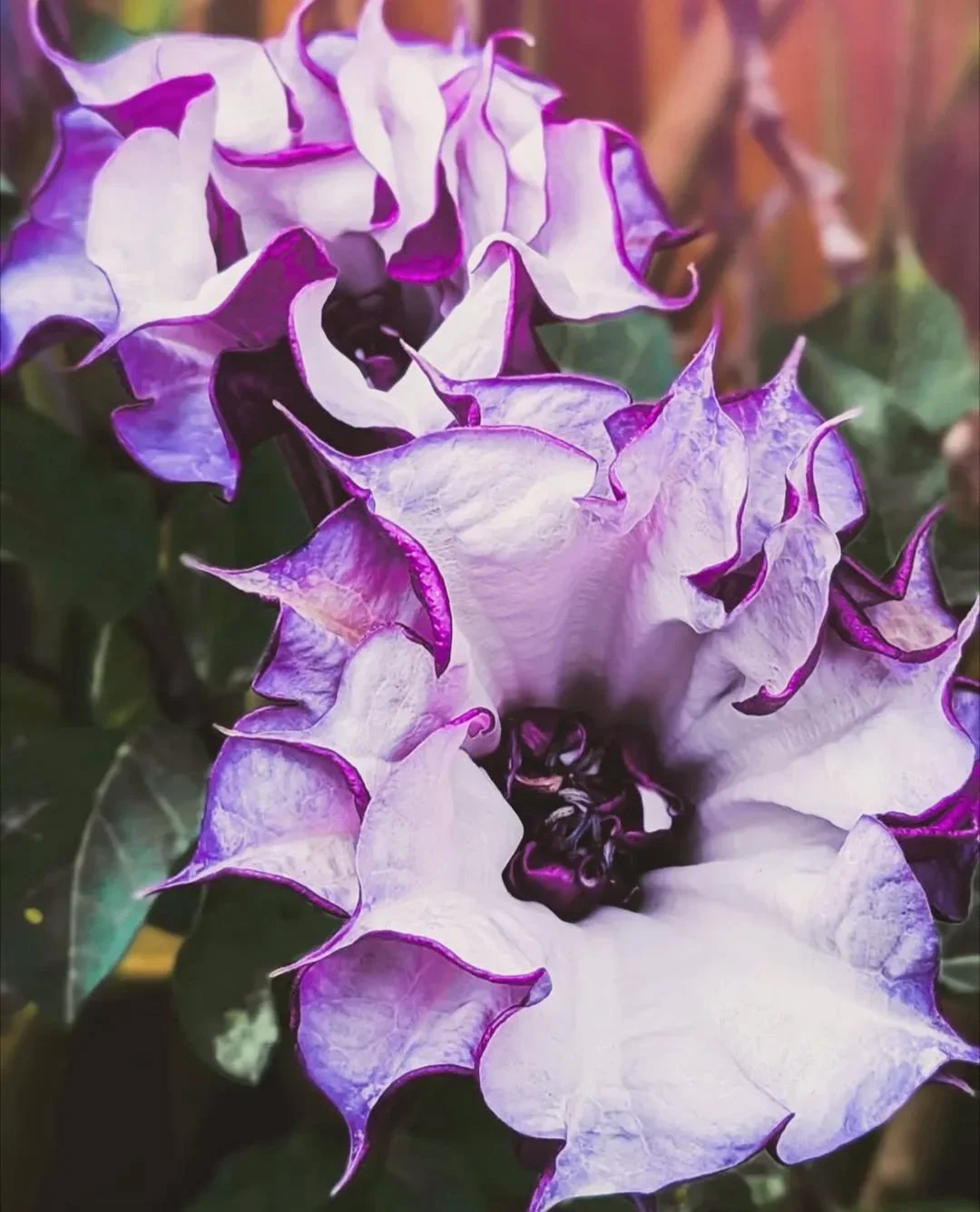
Devil’s Trumpet
Aka Jimsonweed or Datura
Devil’s trumpet has powerful hallucinogenic properties, but if too much is in ingested it can be poisonous. Its striking flowers bloom at night and close before noon the next day.
Its been used by different cultures across history to create and break hexes, to protect from evil, as a sleep and dream aid, to induce visionary dreams, to hold counsel with the gods, to foretell the future, to find stolen objects, to make prognosis of black magic associated illness, and as pain-relief ointment, aiding the acquisition of "dream helpers," or gaining a specific skill, such as fishing

Spells
-
Sprinkle new salt in your shoes
Carry the left hind foot of a rabbit
A rag with dried frog blood on it is carried in the left pocket. After acquiring the blood, bury the rag in the front yard for 8 days. On the ninth day, take it up and you’ll be lucky from then on.
A bone from a black cat is carried
A bone from the front right paw of a possum is carried
Dried tip of a cow’s tongue
-
Get three sticks from the nest of a dove. Soak them in a mixture of your urine (1/2 cup) to (1pint) whiskey for three days and bury under your door step for your preferred partner to walk over.
Take a turkey feather and measure it with a red string on a Sunday. Wear this around your right wrist.
Bury your name and that of a potential love under a willow tree, on the east side where the morning sun first falls on the wood.
Take a queen Elizabeth root and use it to measure your left ring finger. Where your finger ends on the root, carve out a hole about 1/2 a cent in diameter, and save the piece for later. Take a white hair from a black cat (usually happens in old age), the toe nail clipping of your little toe on the right foot, and some of their fluids or toe nail clippings. Place all of this into the hole and shove it in there. Plug it back up with the piece you saved and wrap the root in that place with a red string. Hide this in their mattress.
-
To quiet a crying baby one would hold a lit candle over a vessel containing water while concentrating on what was wanted (such as peace and tranquility) while dripping the melting wax into the water. The vessel is usually kept near where the baby sleeps; other times it might be placed under its crib or chair.
Appalachian practitioners worked to protect themselves, their family members, neighbors (or community), livestock (and crops) from the harmful influences of these otherworld entities by employing various types of charms and spells, almost always from materials found right there in the hills.
Magical Herb
Correspondences
-
Yarrow was often called Woundwort or Knight's Milfoil, thanks to its use in treatment of battle injuries. Scotland's Highlanders use it to make a healing ointment, and in the Orkney Islands, yarrow is used to make a tea that "dispels melancholia." Maud Grieve tells us in A Modern Herbal that the Romans referred to it as herba militaris, the soldier's herb. French workmen in the Middle Ages knew that yarrow worked well on injuries to fingers and hands - in fact, in some areas it was known as "the herb of carpenters."
In addition to its uses in soft-tissue injuries, yarrow is well known as a combatant against fever. A number of Native American tribes used it in teas that were given to the sick, to bring body temperatures down. In India, a tea called gandana is given to the ill to induce sweating, thus lowering the fever.
Yarrow can be used in magical workings related to healing, love, and courage. Wear it on your person to boost your self-esteem and courage, or carry a bunch of dried yarrow in your hand to stop fear. A sprig hanging over the marriage bed guarantees at least seven years of passion and love. Taking a ritual bath with yarrow can help increase your psychic abilities. It can also be used to exorcise negative energies from a place or person.
If you're working on a healing ritual for someone who is ill, consider burning dried yarrow as incense, or place a sachet of yarrow under the person's pillow to bring about restful sleep.
Other Names: Achillea, Lady's Mantle, Woundwort
Gender: Feminine
Element: Water
Planetary Connection: Venus
-
Valerian was named for the physician Valerius, one of the first to use the plant medicinally. Around the eleventh century, Anglo-Saxon leeches recommend its use in battling menstrual cramps. It was called Amantilla during the middle ages, and there is a recipe which recommends the use of a tea made from "the juice of Amantilla id est Valeriana," to bring about peace between warring factions. Chaucer refers to the plant as Setwall.
Valerian may smell raunchy, but it's also known as a plant of love and protection. Hang it in your home to protect against natural disasters, such as lightning strikes or fire. If you're a woman, pin a sprig to your shirt to attract men your way. Quarrels can be resolved in a home by placing valerian leaves around the perimeter of the house.
If you are fighting with a family member, try putting a sprig of valerian in each corner of your home. Putting it over each door will prevent strife and discontent from entering -- but be warned - some people find that the smell of valerian reminds them of cat urine.
Other Names: All-heal, Heliotrope, St. George's herb, Amantilla, Setwall
Gender: Feminine
Element: Water
Deity Connection: Aphrodite, Venus
Planetary Connection: Venus
-
Mugwort is an herb that is found fairly regularly in many modern Pagan magical practices. From its use as an incense, for smudging, or in spellwork, mugwort is a highly versatile - and easy to grow - herb.
Part of the artemisia family, mugwort was used in Anglo-Saxon Britain to cure people who had fallen victim to “elf shot,” which appears to be a catch-all term used to apply to people who had become sick, their illness being blamed upon the invisible arrows of the Fae.
Bald’s Leechbook, an herbal from around the ninth century, refers to the use of mugwort to cast out demonic possession. The author also recommends heating a large stone in the fireplace, then sprinkling it with mugwort, and adding water to create a steam for the patient to inhale.
In some magical traditions, mugwort is associated with divination and dreaming. If someone has overactive dreams, they can be balanced out with a ritual bath made from mugwort and indulged in prior to bedtime. To bring about prophecy and divinatory success, make an incense of mugwort to burn at your workspace, or use it in smudge sticks around the area in which you are performing divination rituals.
Mugwort is often associated with the female reproductive system, perhaps because of its associations with the moon, and can be used to bring on delayed menstruation.
Native American tribes used mugwort leaves to rub on one’s body as protection from ghosts.
Other magical uses:
Use mugwort baths or incense in rituals focusing on treating depression.
Make a set of smudge sticks using dried mugwort, to use in ritual settings bringing about prophecy or divinatory needs.
Place mugwort under your pillow to prevent astral attacks, or to ward off psychic attacksfrom those who would do you harm.
Plant mugwort in your garden to attract the Fae.
Burn mugwort as part of an incense blend celebrating Litha.
Make protection oil for your home and property with mugwort.
Create a magic broom or besom with mugwort woven into it, and use it to sweep negative energies from your home.

Superstitions
-
Never answer a calling voice: If you hear someone calling your name in the woods, especially when you are alone or at night, do not acknowledge or answer it
No whistling or singing: Locals warn against whistling or singing at night, as it is said to draw unwanted attention from wild animals or unseen entities
Heed sudden silence: If the natural sounds of animals suddenly stop, it is an indicator that a predator is near
https://www.reddit.com/r/Ruleshorror/comments/15p510s/hiking_in_appalachia_the_basics/
https://www.thetravel.com/things-never-do-appalachia-mountains/
https://www.facebook.com/groups/AppalachianAmericans/posts/10164581762983648/
-
The "Little Ones": If you borrow a tool or find something you need on the trail, it is customary to leave a small offering—like bread—on a tree stump to avoid being cursed
Don't mess with strange trees: Do not cut or carve into oaks that have faces, as folklore dictates their roots are connected to the deep dark
Crossroads: Never disturb or mess with crossroad markings or three pennies left on the ground, as you may owe a fare you cannot pay
-
Leave by the same door: Always exit a home or building through the exact same door you used to enter it
The spilling of salt: If you accidentally spill salt, throw a pinch over your left shoulder with your right hand to keep the devil away
Black cats: If a black cat crosses your path, draw an X in the air three times before the cat reaches the other side of the road to nullify the bad luck
https://www.appalachianhistory.net/2020/10/everyday-appalachian-superstitions.html
The Queer Witches of Appalachia
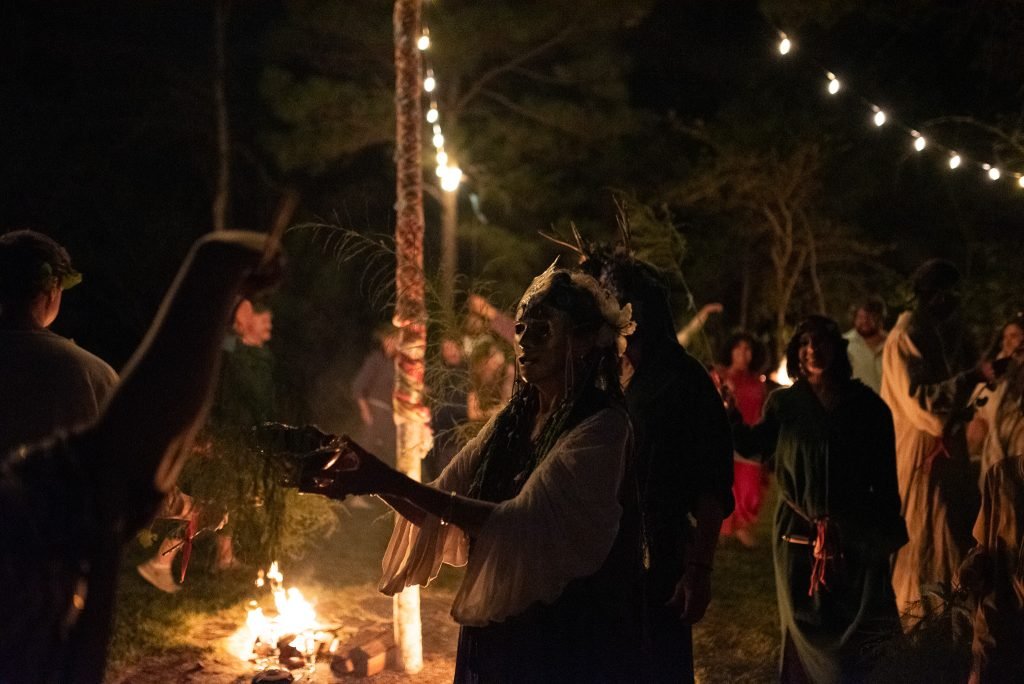
Witchcraft has for centuries been a spiritual refuge for LGBTQ+ abandoned, oppressed, and harmed by Christian churches, especially in Appalachian regions, and with more LGBTQ+ Appalachian people taking on leadership roles, the queer part of Appalachian folk magic is becoming more apparent and celebrated. In doing so, the queer Appalachian witches of today are sustaining their legacies by making their covens, circles, and support groups welcoming environments for the next generation.
Click Here for More Stories of Queer Appalachian Witches
More Resources:
-
Signs, Cures, & Witchery - Augusta Heritage Center:
https://www.youtube.com/watch?si=OlGZVn5DgvF46Tir&v=NwaUcSRsQPQ&feature=youtu.be
-
JimsonWeed: History, Perceptions, Traditional Uses, and Potential Therapeutic Benefits of the Genus Datura:
https://www.herbalgram.org/resources/herbalgram/issues/69/table-of-contents/article2930/
Bewitched Botany:
https://appvoices.org/2023/10/20/bewitched-botany/
Sacred Datura:
https://www.archaeologysouthwest.org/2017/06/21/sacred-datura/
Jimsonweed Fast Facts: https://jpso.com/DocumentCenter/View/62/National-Drug-Intelligence-Center-Fast-Facts--Jimsonweed-Datura-stramonium-PDF