
Mountain Talk
The Appalachian Dialect
Language and Life in Southern Appalachia – The people of Southern Appalachia survived for centuries in a rugged and remote landscape. Their historic isolation promoted the development of culture and language apart from mainstream America. Today they are connected with the world, but the unique qualities of their culture have been sustained, and quick wit, good humor, and a way with words remain a definitive part of mountain life.
In Mountain Talk, songs, stories, and conversations convey the shared sense of place and identity that continues to define mountain people.The people of Southern Appalachia tell the story of their diverse mountain culture and dialect in this popular film.
Language and Life in Southern Appalachia – The people of Southern Appalachia survived for centuries in a rugged and remote landscape. Their historic isolation promoted the development of culture and language apart from mainstream America. Today they are connected with the world, but the unique qualities of their culture have been sustained, and quick wit, good humor, and a way with words remain a definitive part of mountain life.
In Mountain Talk, songs, stories, and conversations convey the shared sense of place and identity that continues to define mountain people.The people of Southern Appalachia tell the story of their diverse mountain culture and dialect in this popular film.
An Overview Video of
how to speak Mountain Talk
Please keep in mind, this video instructs you to play into the “caricature” of the accent. This language reinforces negative Appalachian stereotypes that reduce a diverse 19-state region into a monolith. Our aim is to reveal Appalachia as a diverse place of profound economic inequality, resilience, creativity, and resistance.
For more information check out this podcast episode of The Ezra Klein Show featuring Barbara Kingsolver, author of The Poisonwood Bible and Bean Trees, as she discusses her experience as an Appalachian woman and the Dehumanization of the Appalachian People. If you’re looking for a quick overview of her key points, check out this article.
Regional Differences
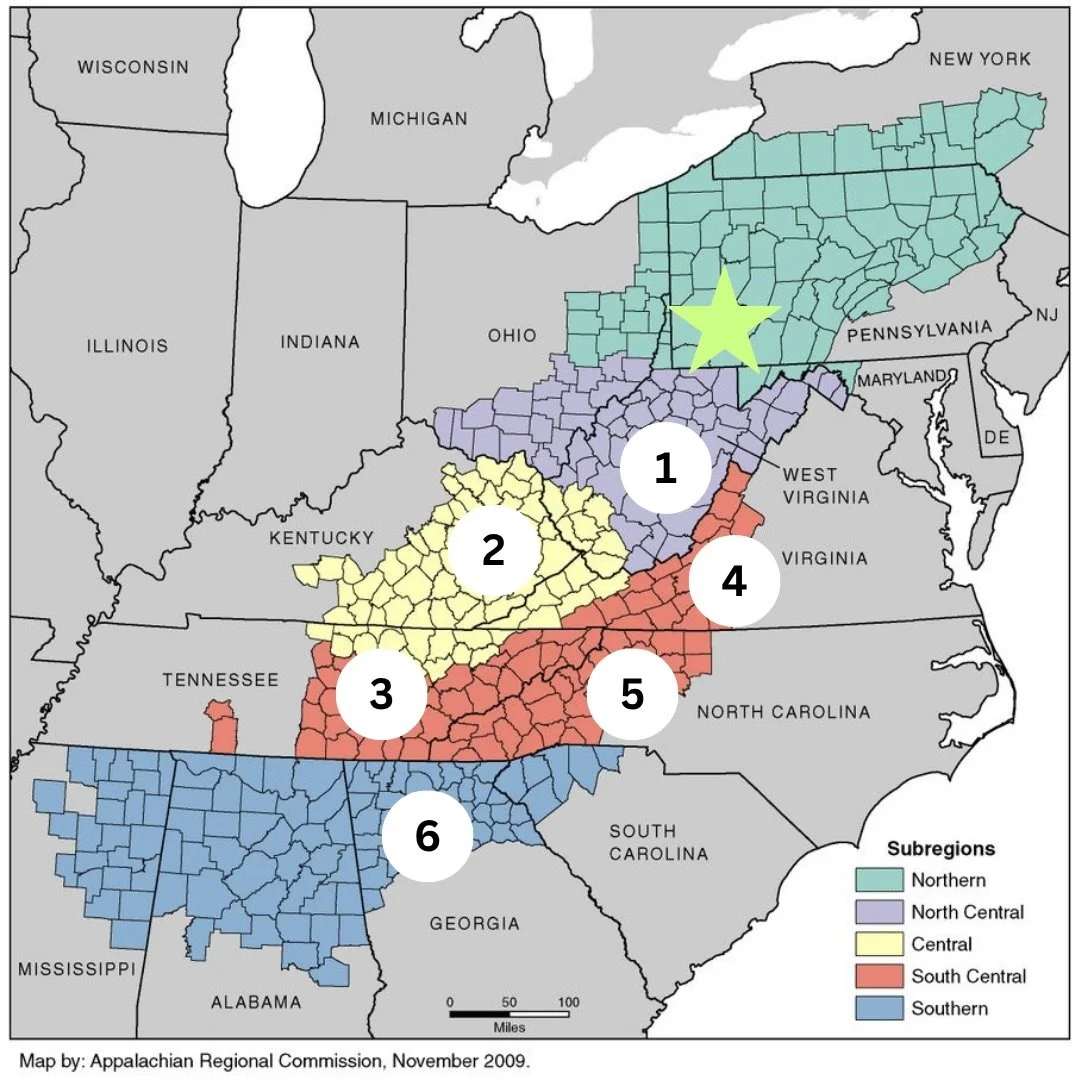
-
Often considered the heart of Appalachia, West Virginia has one of the most recognizable Appalachian dialects. The state’s rugged terrain and history of coal mining, logging, and tight-knit mountain communities helped preserve traditional speech patterns.
Common Expressions
“I’m fixin’ to” – About to do something
“You’uns” or “Y’uns” – You all (regional form of “y’all”)
“Jawin’” – Chatting or arguing
“Holler” – A small, remote valley
Example: “He lives down in the holler by the crick.”
Linguistic Features
Use of double modals: “I might could go.”
Monophthongization: Words like tire and fire may become tar and far.
Final /g/ often dropped in verbs: huntin’, fishin’, workin’
Use of “be” instead of “are”: “Them dogs be barkin’ all night.”
-
Known for its strong dialect and rich storytelling traditions, Eastern Kentucky plays a major role in the preservation of Appalachian speech. The region’s oral history and bluegrass music culture continue to pass down unique vocabulary.
Common Expressions
“Reckon” – Think or suppose
“Haint” – Ghost
“Tuckered out” – Very tired
“Aimin’ to” – Planning to
Example: “I’m aimin’ to get the chores done before supper.”
Linguistic Features
A-prefixing common: “He’s a-gatherin’ firewood.”
Final cluster reduction: cold becomes coal, told becomes tol’
Use of “hit” as a subject pronoun: “Hit was raining all day.”
Double modals: “You might could go if it stops rainin’.”
-
The dialect here blends Appalachian elements with a slightly Southern rhythm, especially around Knoxville and the Smoky Mountains. This area is rich in folk traditions, and you’ll often hear speech influenced by country music, storytelling, and regional pride.
Common Expressions
“Bless your heart” – Can be sincere or sarcastic
“A spell” – A little while
“Right smart” – A lot or quite a bit
Example: “It rained a right smart yesterday.”
Linguistic Features
Unmarked third person singular: “She go to town on Fridays.”
R-lessness in some rural areas: bear may sound like bayuh
Use of “done” for emphasis: “I done told you already.”
Non-rhoticity in some areas (though less common today): “Farmer” may sound like “fah-muh.”
-
Not to be confused with West Virginia, the state, this region is in the western portion of the state of Virginia, and bridges Appalachian and Southern linguistic traditions. You’ll hear a mixture of mountain speech and rural Southern drawl, especially in the Blue Ridge Mountains.
Common Expressions
“Rurnt” – Ruined or spoiled
“Peckerwood” – A slang term that can refer to a country person (sometimes derogatory)
“Cain’t” – Variant of “can’t”
“I swan” – Expression of surprise or disbelief
Example: “Well I swan, I didn’t think you’d show up!”
Linguistic Features
Retention of older English forms: thee, thy occasionally in poetic or folk settings
Use of “was” for all subjects: “We was at the store.”
Diphthong simplification: time might sound closer to tahm
Pronounced nasalization of vowels before “n” or “m”
Use of “done” as an auxiliary verb: “He done fixed it already.”
-
In the Blue Ridge and Smoky Mountains of western North Carolina, Appalachian English still thrives in local conversation, storytelling, and music. The region is known for craft traditions, folk festivals, and a strong sense of local heritage.
Common Expressions
“Right as rain” – Doing well
“Feelin’ poorly” – Not feeling well
“Cut a shine” – Show off or cause a scene
Example: “He sure cut a shine at the party last night.”
Linguistic Features
Non-rhoticity in some communities: dropping /r/ sounds at the end of words
Lexical isoglosses: Different words used in different valleys (e.g., “poke” for bag)
Use of “might could” – Double modals for politeness or uncertainty
Vowel breaking: One vowel becomes two (e.g., bed may sound like bee-yid)
Final consonant reduction: Cold → coal, old → ole
-
The southernmost portion of Appalachia, North Georgia blends Appalachian speech with Southern expressions. This area features dialects that sound a little different from northern Appalachian regions, but still carry the same linguistic roots.
Common Expressions
“Carry” – To take or transport
Example: “I’ll carry you to the store.”
“Dern” – Mild expletive (similar to “darn”)
“Mash” – To press
Example: “Mash the button to start it.”
Linguistic Features
Mix of Southern drawl and Appalachian speech, especially in vowel lengthening
Glide deletion in /aɪ/: Right sounds like rat, light like lat
Merging of “pen” and “pin” sounds: Both may sound like pin
Y’all is more dominant here than “you’uns” or “youse”
Habitual “be” in rural speech: “He be fishin’ every Saturday.”
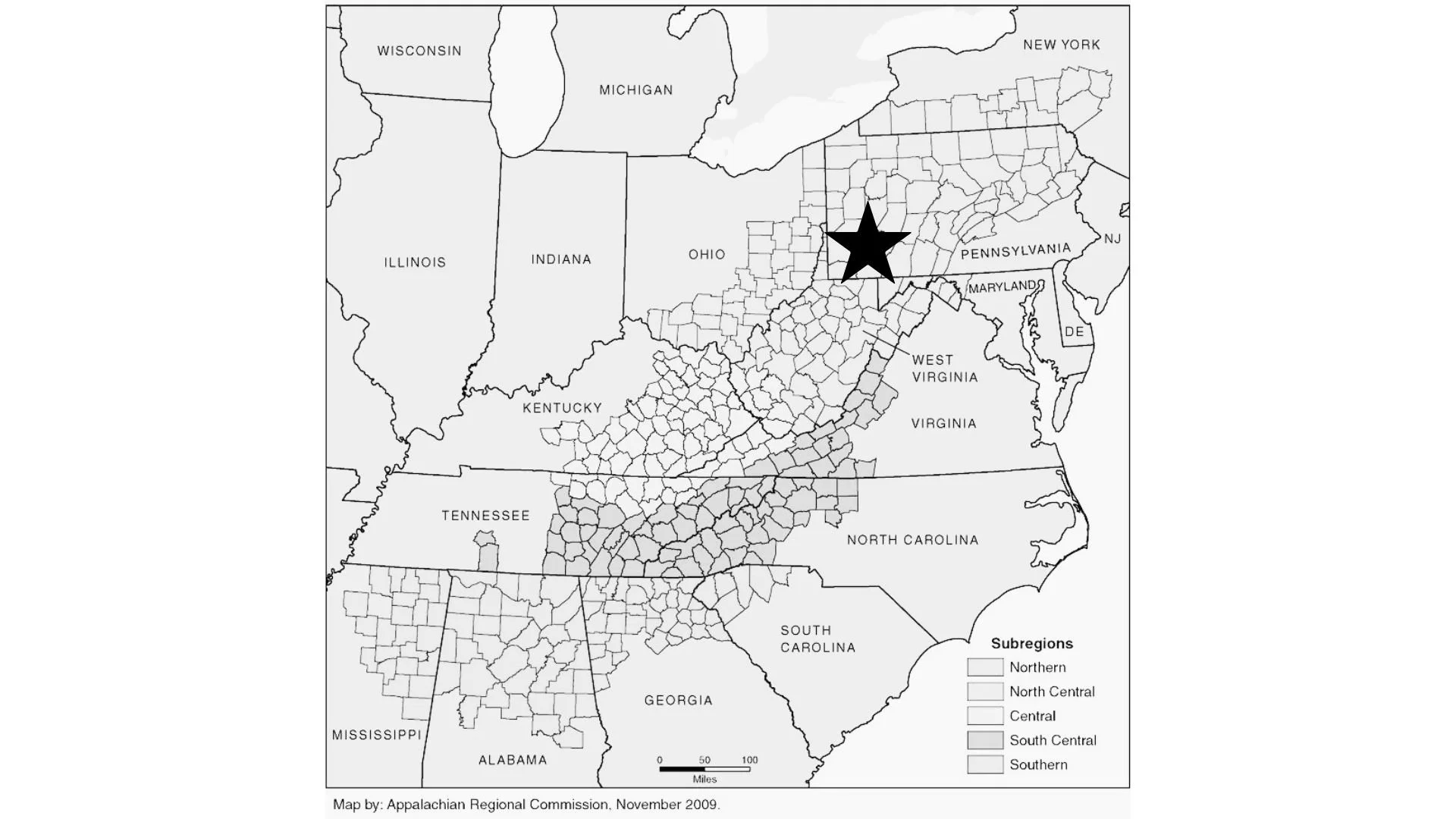
Pittsburghese
The Pittsburgh Appalachian Dialect
Aspects of Western Pennsylvania English
Distinct Pronunciations
Monophthongization: The sound in "house" or "down" becomes an "ah" sound (e.g., dahntahn for downtown).
The "R" sound: Often inserted in "Washington" (Warshington) or dropped in "iron" (arn).
Vowel Merging: The vowels in "cot" and "caught" sound identical (the cot-caught merger), and words like "steel" often sound like "still".
The "L" dip: The "L" is frequently dropped from words, or used to connect names.
Grammar Quirks
Yinz: The iconic second-person plural pronoun, similar to "y'all" or "you guys".
"To be" deletion: Phrases skip "to be" verbs (e.g., "The laundry needs done" instead of "The laundry needs to be done").
N'at: Short for "and that," used at the end of a sentence for emphasis.
Whenever: Used to describe a single, specific past event rather than a recurring one.
"The" usage: Locals often add "the" before specific proper nouns or business names (e.g., "the Giant Eagle").